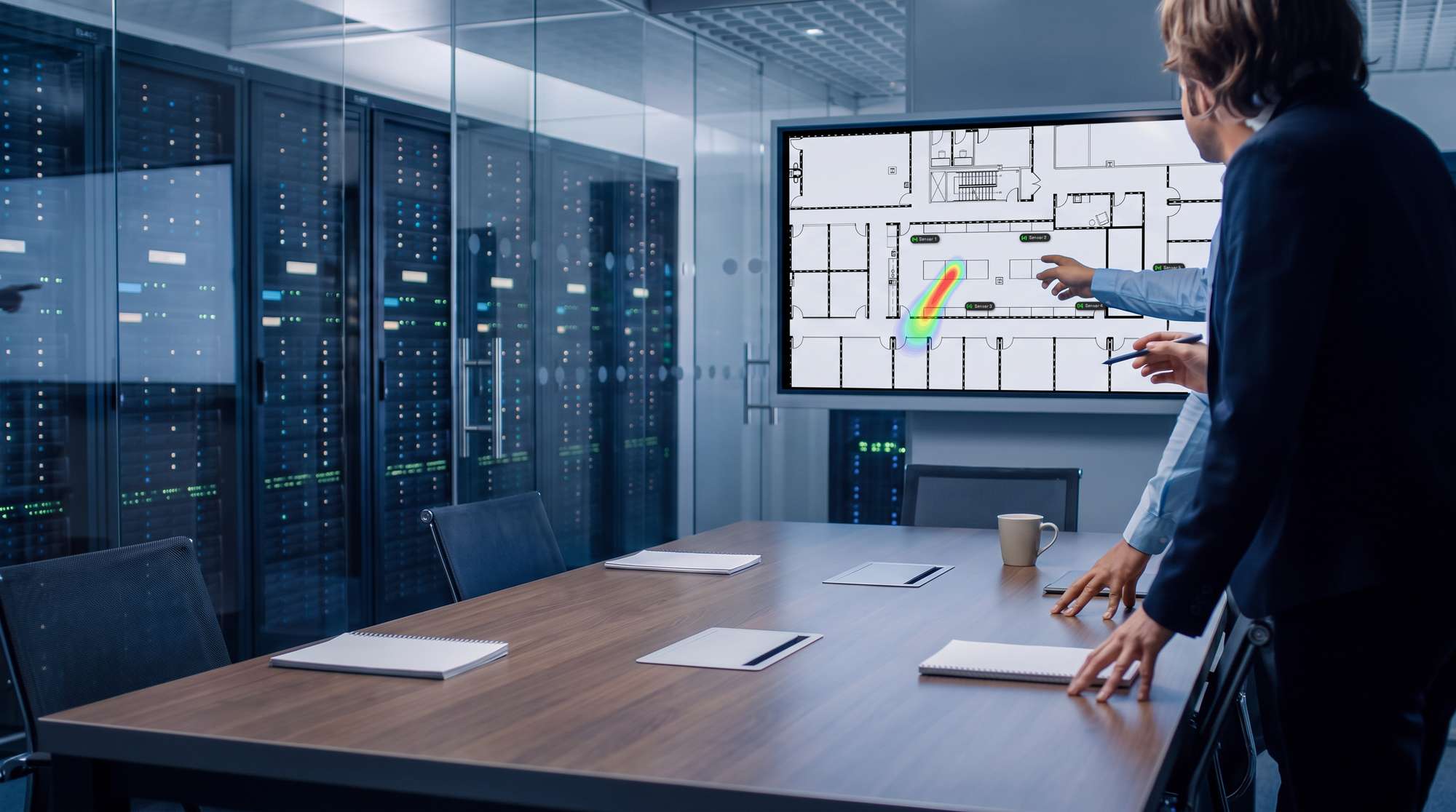
The challenges continuous monitoring is built to address.
Unauthorized
Personal Devices
Smartphones, smartwatches, and wireless earbuds carried into secure areas introduce uncontrolled RF transmitters that can exfiltrate sensitive information — intentionally or not — without triggering physical access controls.
Covert Listening
& Recording Devices
Modern eavesdropping devices are purpose-built to evade detection — transmitting on non-standard frequencies, using burst transmissions, or mimicking legitimate IoT traffic. Periodic manual TSCM bug sweeps cannot keep pace with a persistent or adaptive adversary. Continuous monitoring is the only reliable answer.
Unmanaged Wireless
Proliferation
The growth of IoT, building automation, and shadow IT means high-security facilities contend with an ever-expanding wireless attack surface. Without continuous baseline monitoring, new or rogue devices may go undetected for days or weeks.
Advanced Signal Detection & Analysis Capabilities
Sceptre transforms continuous RF collection into structured, actionable intelligence — autonomously identifying threats, localizing sources, and delivering the situational awareness security teams need to respond instantly.
Continuous Spectrum Monitoring & Alerting
Spectrum masking and new energy detection establish a known-good RF baseline for your environment. Any deviation — a new device, a burst transmission, an anomalous signal — triggers an immediate alert. Built-in circular pre-detection buffer ensures no activity is missed, even before an alert fires.
Wireless Device Detection & Identification
IQ-based detectors for Bluetooth, WiFi (WLAN / WiFi 6E), Z-Wave, Zigbee / 802.15.4, and GSM identify unauthorized personal electronics and IoT devices by protocol, address, manufacturer, and signal characteristics — not just by frequency.
Indoor Localization & Heatmapping
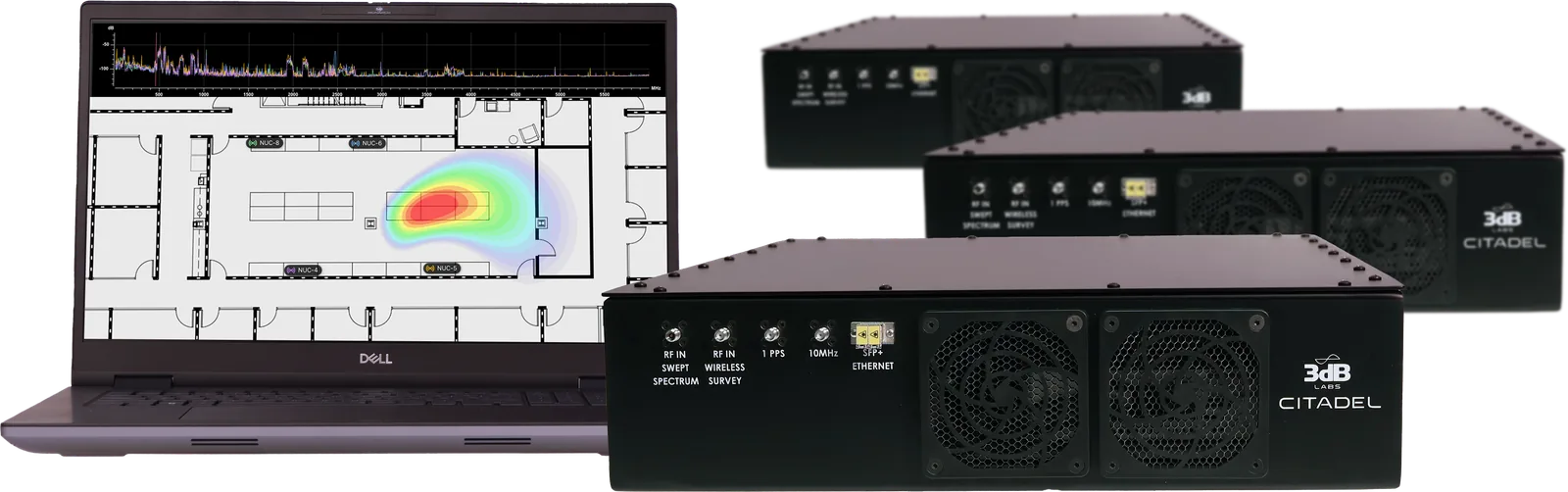
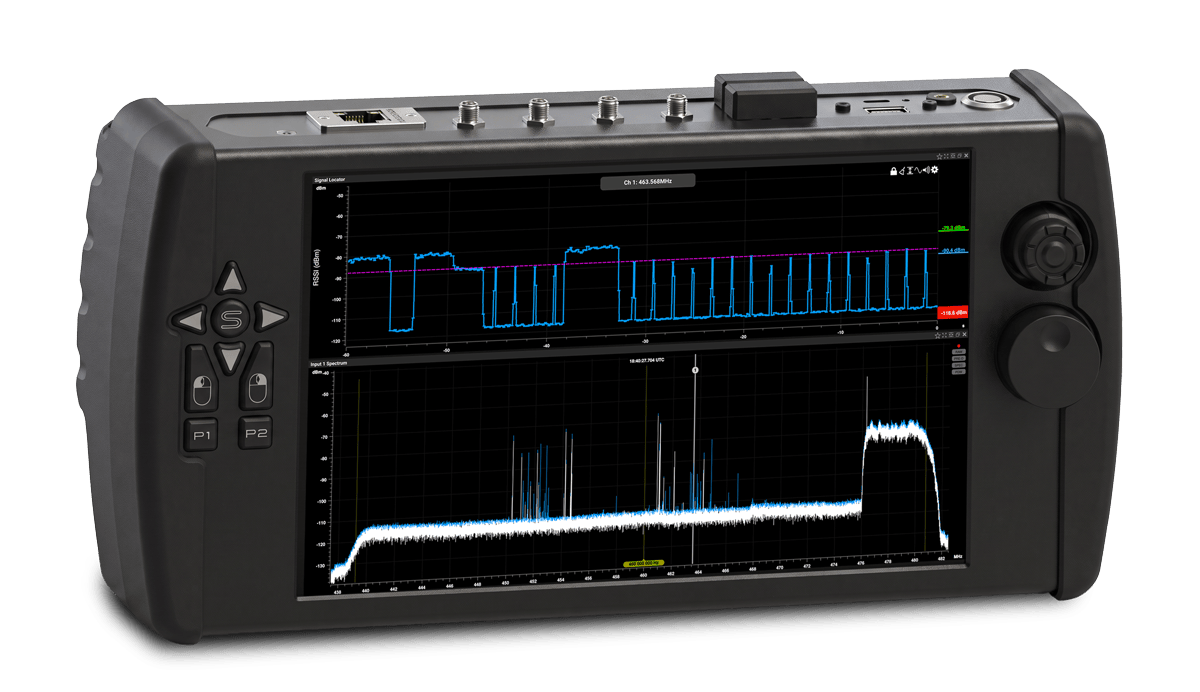
The indoor localization algorithm and event-based heatmapping combine RSSI data from distributed sensors to pinpoint the physical location of signals of interest within a facility floor plan — enabling security teams to respond directly to the source. The same RSSI-based localization drives handheld field analysis, letting operators walk a signal of interest down to its source — indoors or out.
Advanced Signal Characterization & Demodulation
Real-time bit breakout and demodulation of ASK, PSK, QAM, and FSK signals reveals the content and behavior of intercepted transmissions. Video averaging supports recovery of TEMPEST-class emanations. Powerline survey and analysis extends coverage to conducted RF threats on facility infrastructure.
Remote Operations & Unattended Monitoring
Web-based remote access, web masking, and remote spectrum operations enable security personnel to monitor, configure, and task sensors from any location. Unattended operation with automated alerting ensures 24/7 coverage without requiring on-site staff for routine monitoring.
Purpose-Built TSCM Hardware for High-Security Environments.
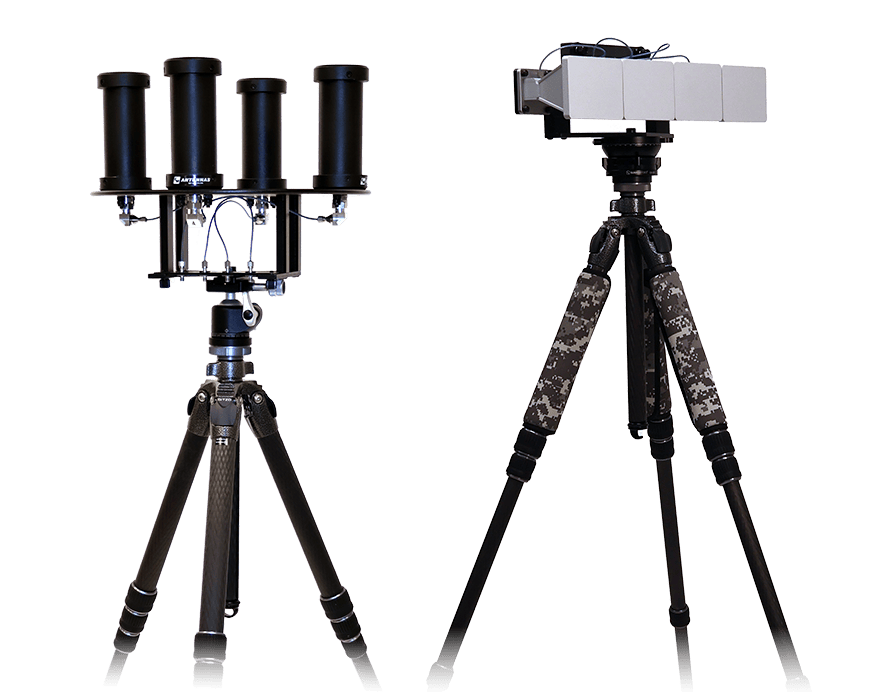
Sceptre-based TSCM kits and hardware — from handheld field analyzers to distributed in-place systems — configured for the specific deployment, coverage, and operational requirements of Technical Surveillance Countermeasures and facility security missions.
ARRAYS
High-Gain Antenna Array Kits
Feeds the Platforms Your Security Teams Already Use.
Sceptre-based TSCM software and equipment is designed to publish RF intelligence directly into existing security management, PSIM, and investigation platforms — with no proprietary lock-in.
PSIM Platforms
RF event data feeds into Physical Security Information Management platforms such as Genetec, Milestone, and Lenel OnGuard for unified security operations
SIEM Integration
Signal intercept logs and alert data can be forwarded to Security Information and Event Management systems including Splunk and IBM QRadar for correlation with cyber and physical event streams
Access Control Systems
RF detection events correlate with badge-in data from access control platforms to flag discrepancies between authorized personnel and detected personal electronic devices
50+ Receivers & Digitizers
Compatible with a broad ecosystem of SDRs and commercial receivers from Rohde & Schwarz, Signal Hound, Keysight, and more — ITAR and commercial variants
Wireless Intrusion Detection Systems
Extends existing wireless intrusion detection systems (WIDS) such as Cisco Adaptive Wireless IPS and AirMagnet with deeper IQ-based TSCM signal characterization and coverage of non-standard protocols traditional WIDS cannot detect
VITA 49.2 & Open APIs
Standard VITA 49.2 IQ data streaming and open file interfaces enable integration with third-party analysis tools, custom workflows, and classified processing architectures
TEMPEST Programs
Video averaging and powerline survey capabilities align with NSA TEMPEST assessment methodologies and support classified facility accreditation workflows
Remote Operations
Web-based remote access and bandwidth-constrained C2 support integration with existing facility security operations centers and remote monitoring workflows
Ready to Secure Your RF Environment?
Tell us about your application, operating environment, and deployment requirements. Whether you support EW, TSCM, or another specialized use case, we’ll help you identify the right solution based on your needs.

513-3dB-Labs (513-332-5227)
9050 Centre Pointe Drive Suite 340
West Chester, OH 45069
3dB Labs, Sceptre, Kirby and Monarch are registered trademarks of 3dB Labs, Inc